When I start my creation process I always base everything around how I believe a living being should be represented as if it’s actually alive, rather than just a stiffly posed creature with dead eyes. In thinking about my pose and composition, I do what I can to study the creature, watching how it moves and behaves so as to pick a reference that best represents their personality. Seeing as eyes are commonly referred to as the window to the soul, this is often where I place most my attention when starting any piece. In animals with eyes very different from humans it’s especially important in my mind to not disregard them as a minor detail, and put as much effort into giving the viewer an opportunity to connect with the creature depicted as you can.
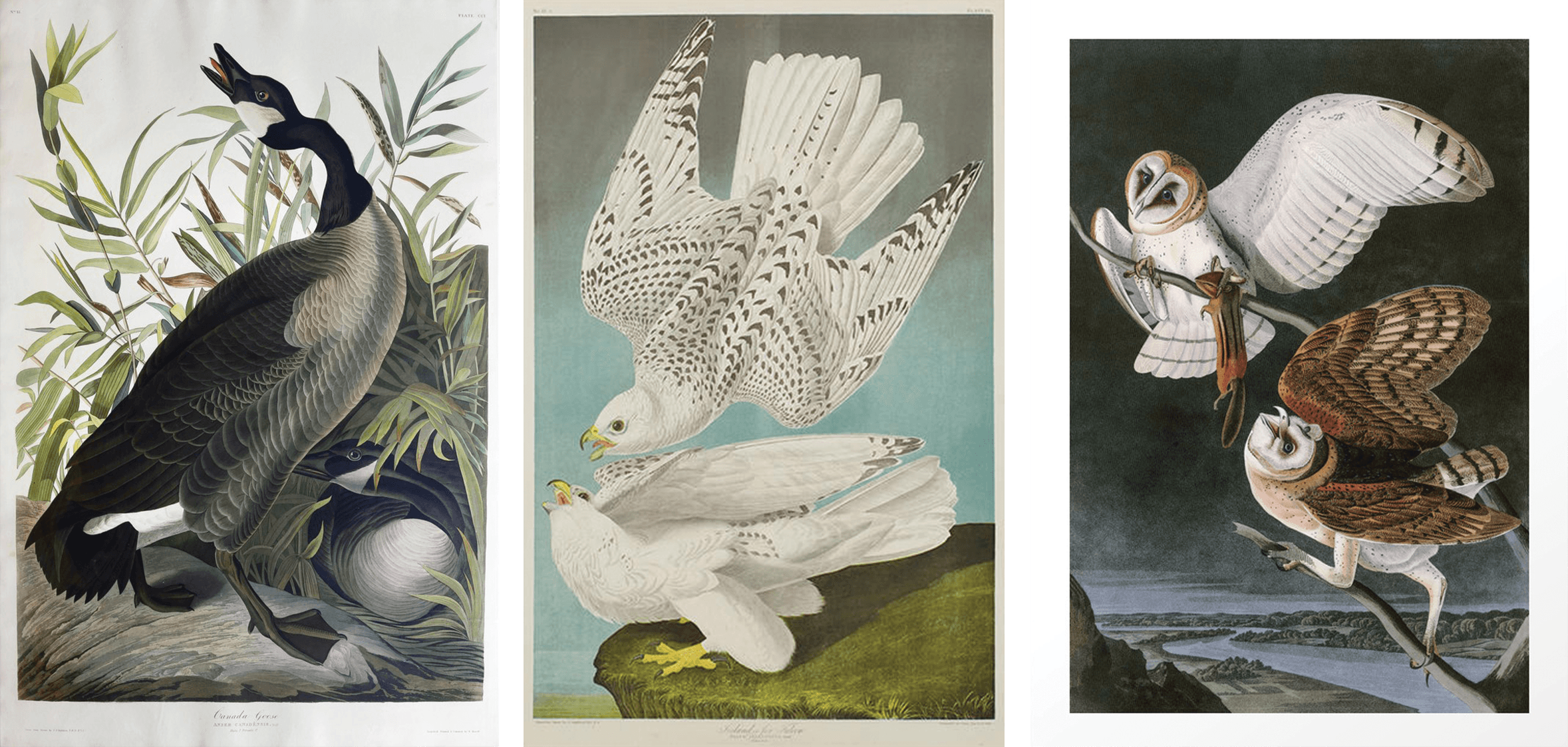
There are some famous illustrators who don’t follow the same philosophy I do, and while their work is still remarkable, it’s very hard to connect to the subject as a living and breathing being. Take John James Audubon for example: of course his work and research is unprecedented, and there is no denying that his ornithological work set a great example for future illustrators; but since all his models were stuffed birds he shot and killed, their poses appear stiff and unnatural while the eyes look beady and lifeless.
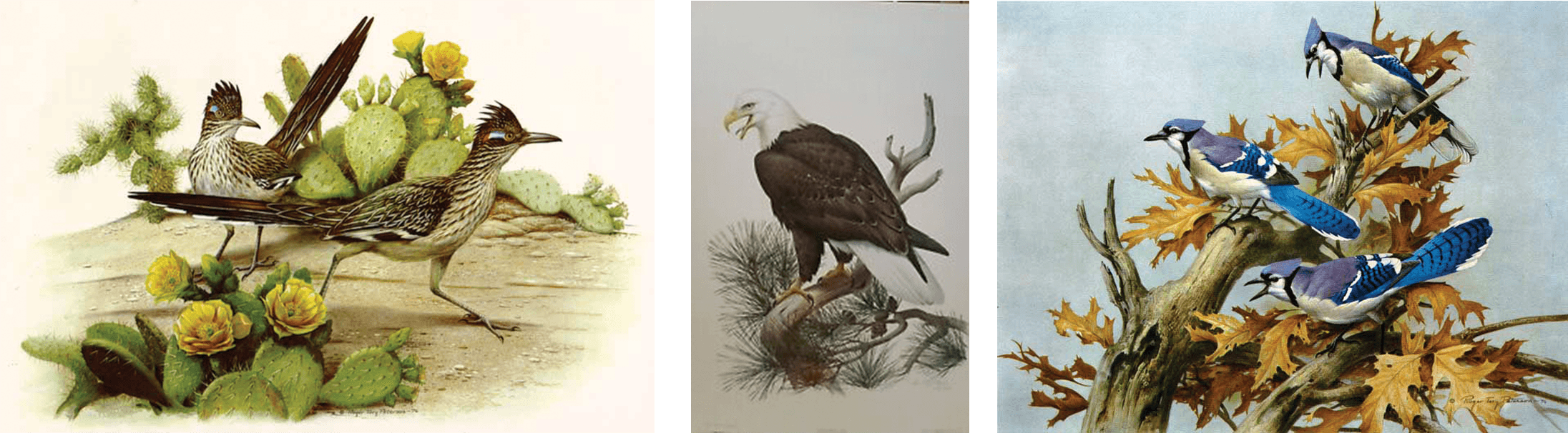
Roger Tory Peterson does work similar to Audubon in subject and composition, but his illustrations are much more lively and colorful. His spot illustrations are some of my favorite; even with the limited background of a branch and maybe a few flowers, he is able to convey enough context to how the subject lives and interacts with the space. His work is incredibly detailed and well-researched, judging by the fact that he regularly goes out to observe and interact with the subjects of his work. I strive to achieve the level of work he produces, and always take the chance to observe and interact with wildlife in the same way he does so as to better understand the living creatures I am representing.
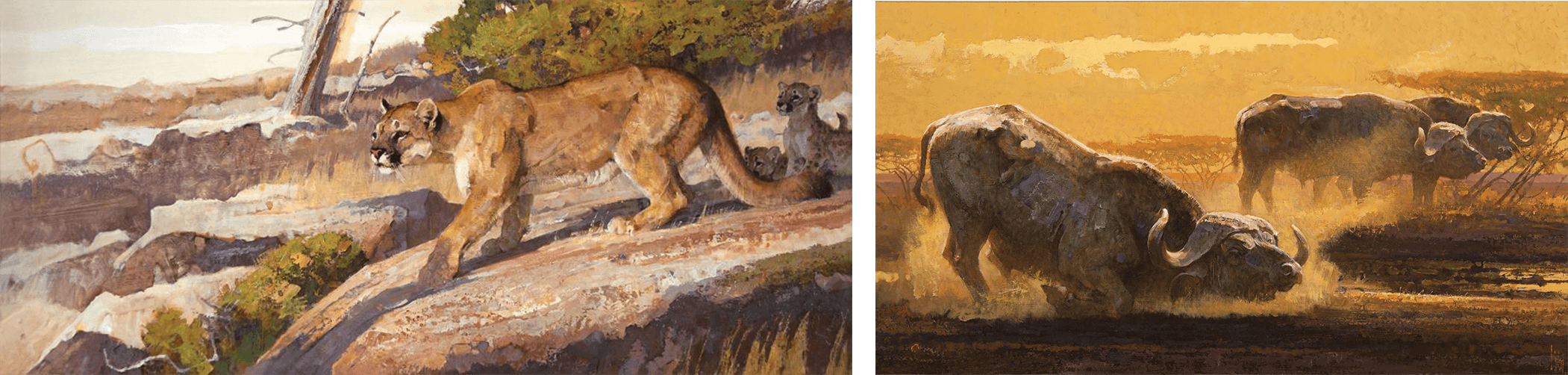
Another illustrator whom I admire is Bob Kuhn. His work is not ornithological in nature, but his depictions of powerful creatures such as wild cats and buffalo carry so much weight and presence that they don’t need to be extraordinarily high in detail to truthfully represent the subject. While I am working on it, I still do not hold the skill or concentration it takes to represent every detail of every feather or strand of fur, so seeing someone like Bob Kuhn working in a looser manner while still remaining true to the subject’s form is very inspiring to me.
There are many other illustrators I look up to, but the ones I mentioned above have really helped shape my values in wildlife illustration. The amount of research it takes to create work of this caliber is very impressive to me, and is a huge reason why I make an effort to observe my models in real life as opposed to running a quick google search for some photographs that may or may not accurately convey the subject. I want to make my work as lively and accurate as Roger Tory Peterson’s, while also reminding myself that it’s okay not to get caught up in every tiny detail and being able to focus on the bigger picture like Bob Kuhn.
